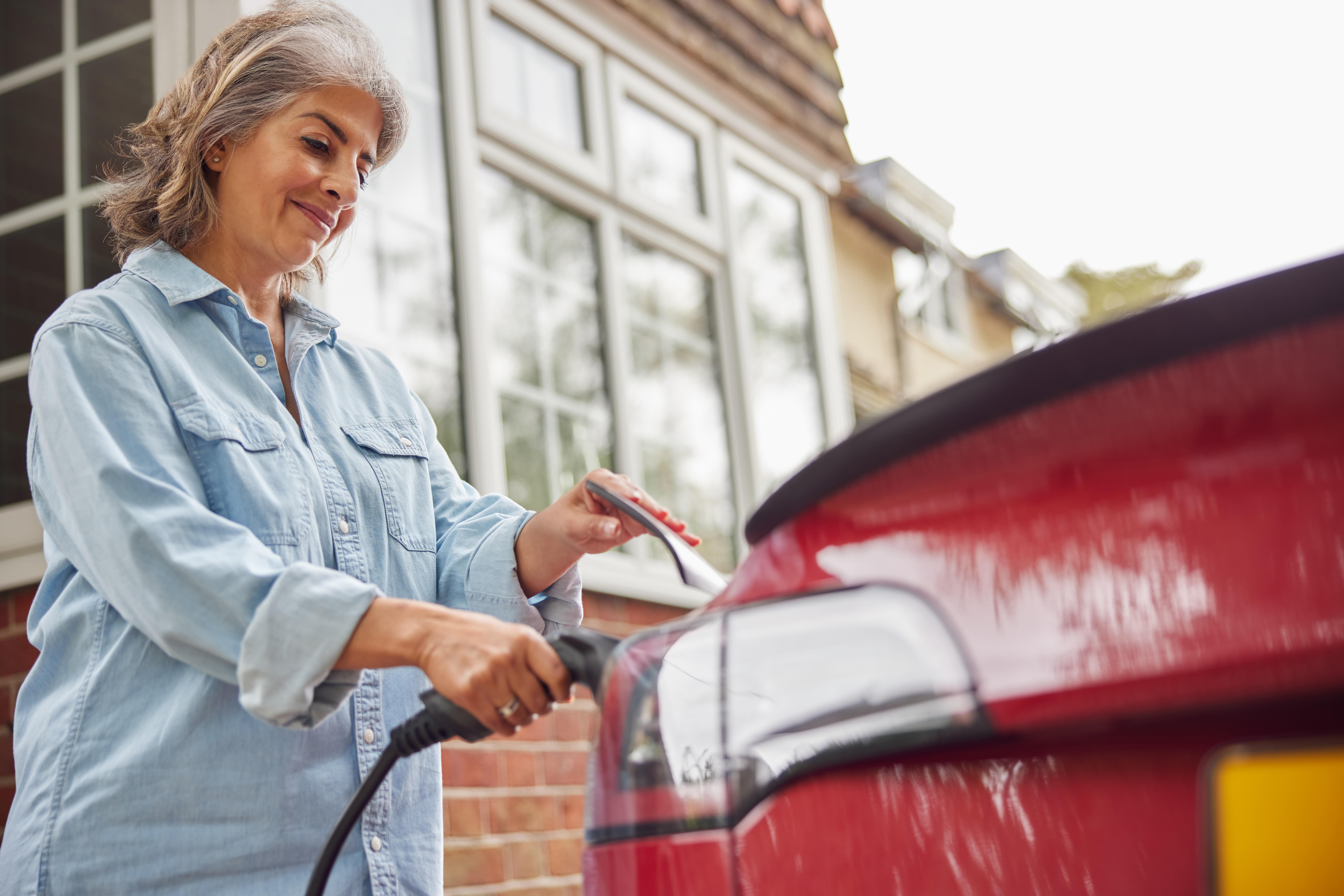
Imagine plugging in five standard refrigerators at the exact same time. According to typical appliance ratings, that intensity represents roughly the electrical draw of a Level 2 electric vehicle charging station. While that sounds like a recipe for a tripped breaker, most modern homes can accommodate this power demand without requiring a total overhaul.
So, how much electricity does an EV charger use at home? We must distinguish between speed and volume. Think of kilowatts (kW) as the speedometer measuring the flow rate, while kilowatt-hours (kWh) act like the gas tank size you actually pay for. Industry data reveals that despite the high speed, the utility bill impact is almost always lower than buying gasoline.
The 'Trickle' vs. The 'Firehose': Measuring Power Draw in Level 1 and Level 2 Chargers
If you visualize electricity as water moving through a pipe, voltage acts as the water pressure while amperage represents the width of the hose. A standard household plug—known as Level 1—is essentially a garden hose: it operates at low pressure (120 volts) and has a narrow opening (12 amps). It gets the job done eventually, but the flow is strictly limited. Upgrading to Level 2 doubles the pressure to 240 volts and widens the "hose" significantly, allowing power to rush into your battery rather than drip.
The difference in filling speed between these two setups is drastic and often dictates whether an EV fits your lifestyle. While level 1 vs level 2 charging efficiency is roughly similar regarding energy loss, the time required to "fill the tank" varies wildly. To match the level 2 charger power consumption speeds, you typically need a dedicated circuit similar to what your clothes dryer uses.
That "water pressure" translates to miles back in your tank as follows:
- Level 1 (Standard Outlet): Delivers ~1.4 kW, adding roughly 3 to 5 miles of range per hour.
- Level 2 (Dedicated Circuit): Delivers 7.2 kW to 11.5 kW, adding 25 to 45 miles of range per hour.
Choosing the right "hose" depends entirely on how far you drive daily, not the total size of your battery. You don't need a firehose to fill a water cup, and you may not need high residential EV charging station amperage if you only drive 20 miles a day. Determining if you can survive on a standard plug or need the upgrade requires looking at your specific daily consumption.
Mapping Your Commute to Your Meter: How Many kWh You Actually Need Daily
While total range gets all the headlines, your daily "energy diet" is the only number that truly impacts your wallet. Instead of Miles Per Gallon (MPG), electric vehicles measure efficiency in miles per kilowatt-hour (miles/kWh). Think of a kilowatt-hour as a "gallon" of electricity; most modern EVs get roughly 3 to 4 miles out of every kWh. This means a short trip to the grocery store barely sips from your home’s power supply, while a cross-town trek consumes a larger slice of your energy budget. This efficiency rate helps calculate home ev charging costs accurately.
Calculating your daily "fill up" requires simple math: divide your daily miles by that efficiency number (we will use a conservative 3.5 miles/kWh). For many homeowners, the result reveals that an EV draws less energy overnight than a central air conditioner uses during a hot afternoon. This volume calculation is crucial because it ultimately determines your cost per mile for home EV charging. Consider these requirements for kilowatt hours to charge electric car batteries based on common round-trip commutes:
- 20 Miles (Short Commute): Requires ~5.7 kWh (roughly 2 hours on a basic Level 2 charger).
- 40 Miles (Average Commute): Requires ~11.4 kWh (roughly 3–4 hours on a Level 2 charger).
- 60 Miles (Long Commute): Requires ~17.1 kWh (roughly 5–6 hours on a Level 2 charger).
From Kilowatts to Dollars: Predicting the Impact on Your Monthly Utility Bill
Determine the utility bill impact of electric vehicle charging by grabbing your latest statement and looking for two specific line items: energy supply and delivery. While gas stations advertise prices in neon lights, utility companies often split the total cost into these separate categories, hidden in the fine print. Add these numbers together to find your true "price per gallon" of electricity—the national average currently sits around 16 cents per kilowatt-hour (kWh).
Many prospective buyers worry: does EV charging increase electric bill significantly? The answer is yes, but the context changes completely when you view it as a fuel shift rather than a new expense. If you drive 40 miles daily, you will consume roughly 340 kWh per month. At the average rate, your electric bill climbs by about $55. However, because electric motors are far more efficient than combustion engines, the electricity costs significantly less than the gasoline they replace.
Compare the average monthly cost to charge an EV at home versus fueling a comparable gas car for 1,200 miles:
- Gas SUV (25 MPG at $3.50/gal): ~$168 monthly fuel cost.
- Electric SUV (3.5 miles/kWh at $0.16/kWh): ~$55 monthly charging cost.
- Net Monthly Savings: ~$113 staying in your pocket.
With the financial savings confirmed, you must next ensure your home's physical infrastructure can actually deliver that power safely.
The 'Power Budget' Strategy: How to Charge Fast Without Overloading Your Home
Just like you can’t spend the same dollar twice, your electrical panel generally can’t run every high-powered device simultaneously without tripping a breaker. This is especially true in older homes with 100-amp service, where the available power is limited. While an electrician should verify your panel's total capacity, you can often avoid expensive upgrades simply by managing your "load"—scheduling your charging session so it doesn't compete with these other heavy hitters:
- Electric clothes dryer
- Electric oven or range
- Central air conditioning unit
- Level 2 EV Charger
Timing your charge isn't just about safety; it is the single most effective way to lower your fuel costs. Many utility companies offer "Time-of-Use" plans where electricity prices drop significantly late at night when grid demand is low. Leveraging peak vs off-peak electricity rates for EVs can sometimes cut your rate by 50% or more. Consequently, the best time of day to charge EV for savings is usually between midnight and 6:00 AM, potentially turning that $55 monthly estimate from the previous section into something closer to $30.
Fortunately, you don’t need to set an alarm clock to plug in your car at 1:00 AM to capture these savings. Most modern electric vehicles allow you to set a charging schedule directly on the dashboard screen, and smart EV chargers with energy monitoring can sync with your utility provider to automatically grab the cheapest power available. By automating this process, you ensure your car wakes up with a full battery without straining your home’s power budget or your wallet.
Your EV Charging Action Plan: Slashing Costs and Maximizing Efficiency
You can now view your EV charger not as a mysterious power drain, but simply as a large appliance that requires smart scheduling. Treating the electric vehicle home charging infrastructure requirements as a managed system ensures you won't overload your panel while securing a "fuel" cost significantly lower than gasoline.