Why does your Texas electricity bill change in winter? Learn how heating, energy usage, plan types, and delivery charges can affect your monthly electricity costs.

When temperatures drop in Texas, your electricity bill may change, even if your air conditioner isn't running as often.
If you're wondering why your electric bill is so high in winter in Texas, the answer may involve your heating system, electricity usage, plan structure, or utility delivery charges.
Understanding these factors can help you determine whether your bill changed because of increased consumption, pricing, or other charges.
What Causes Texas Electricity Bills to Change in Winter?
Colder weather can affect how much electricity your household uses and how frequently certain appliances operate.
While summer electricity consumption is often driven by air conditioning, winter usage may be influenced by heating systems, water heaters, lighting, and time spent indoors.
Several factors can affect your winter electricity costs:
- Heating systems: Electric heating equipment may increase electricity consumption during colder periods.
- Temperature changes: Cold fronts can cause heating systems to run longer or more frequently.
- Household routines: More time indoors may mean additional lighting, cooking, and appliance use.
- Electricity plan structure: Your monthly charges depend on how your plan calculates electricity costs.
- Utility delivery charges: Charges for delivering electricity to your home may include fixed and usage-based components.
Does Heating Your Home Use More Electricity in Winter?
It depends on how your home is heated.
During colder weather, heating systems may run longer or more frequently to maintain a comfortable indoor temperature. However, not every heating system uses electricity in the same way.
The type of equipment in your home can help explain why your electricity consumption changes when temperatures drop.

Does Running the Heater Use More Electricity Than Air Conditioning?
Not necessarily.
Electricity consumption depends on the type of heating and cooling equipment, its efficiency, outdoor temperatures, and how long it operates.
An electric resistance heater and an efficient heat pump can use different amounts of electricity to provide heating. Similarly, air-conditioning usage depends on summer temperatures and household cooling preferences.
Rather than assuming winter or summer is more expensive, compare your monthly kWh usage to understand how your household's energy needs change throughout the year.
Can My Winter Electricity Bill Increase Even With a Fixed Rate?
Yes. A fixed electricity supply rate doesn't mean your total monthly bill is fixed.
With a fixed-rate electricity plan, your contracted supply rate generally remains unchanged during the agreement term, subject to applicable contract terms and permitted adjustments.
However, your total bill depends on more than your electricity supply rate. It may also include utility delivery charges, plan-specific charges or credits, taxes, and applicable fees.
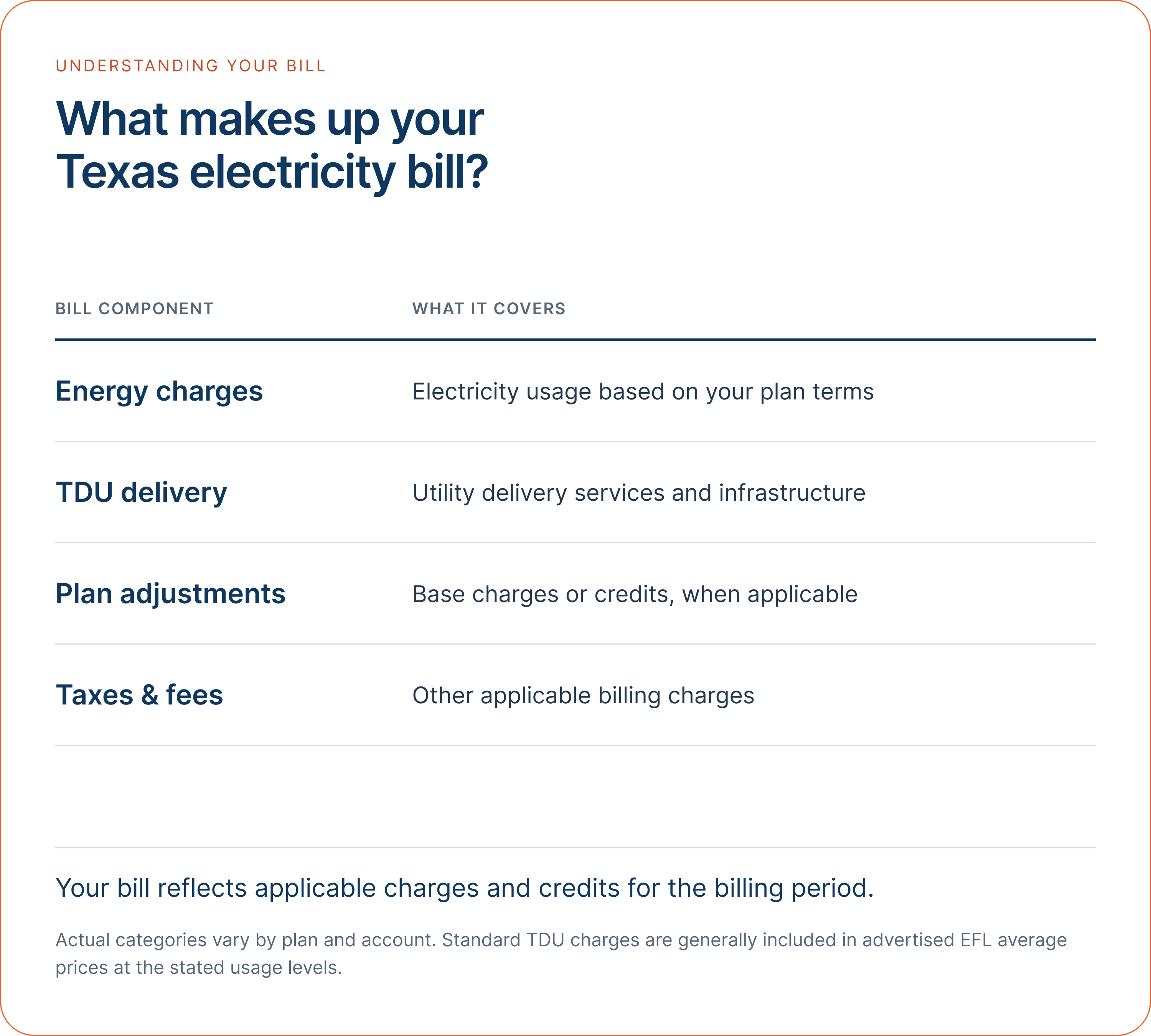
Understanding these components can help you identify which part of your bill changed, rather than assuming an increase in the total means your electricity supply rate went up.
How Does Increased Electricity Usage Affect Supply Charges?
Even when your electricity supply rate stays the same, your supply charges may change depending on how much electricity you use.
For example, a household may consume more electricity during a colder month because its heating system runs more frequently.
The comparison below illustrates how two months with the same supply rate can result in different supply charges.
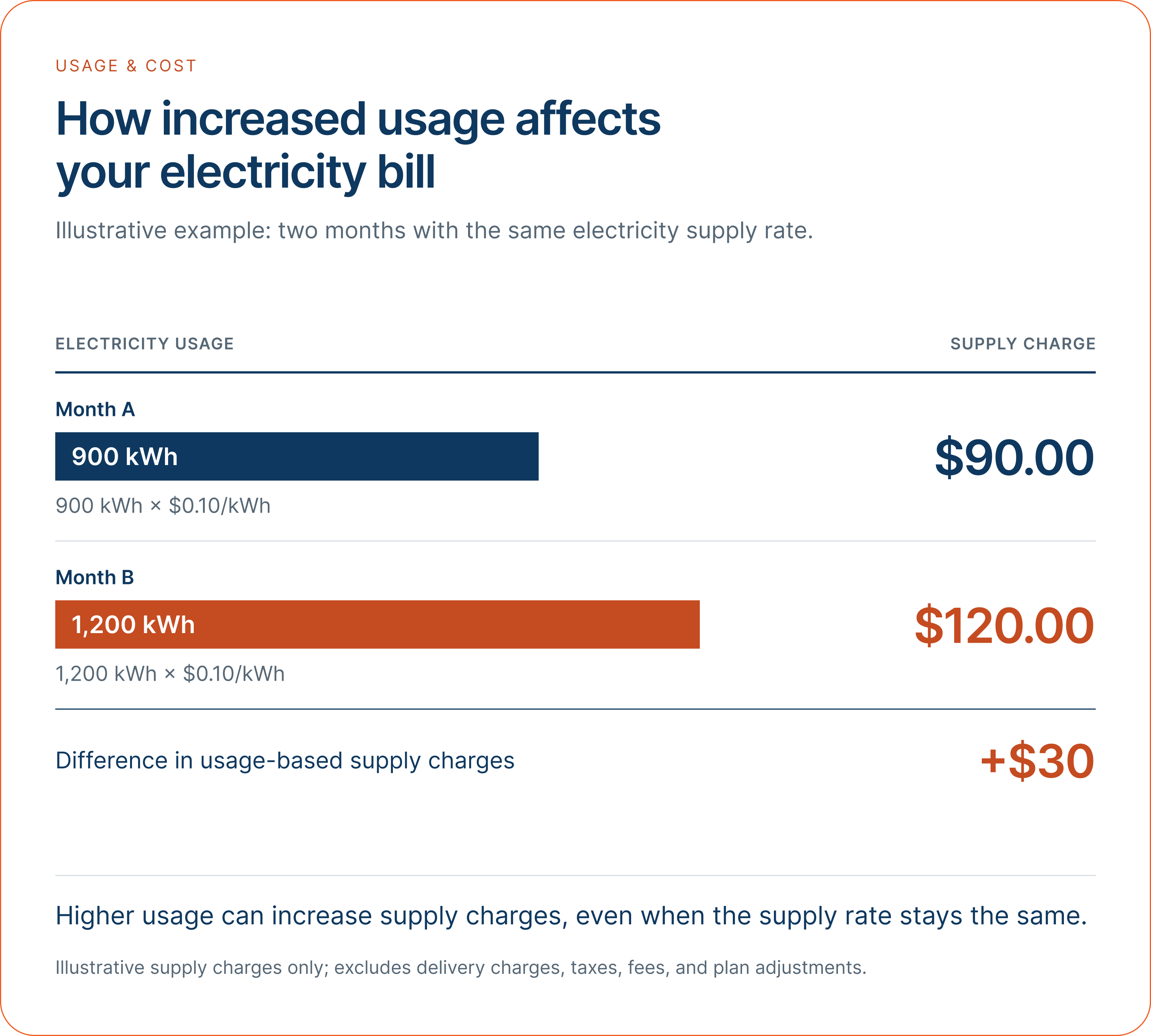
Keep in mind that this example only shows usage-based electricity supply charges. Your total bill may also include utility delivery charges, taxes, fees, and other plan-specific adjustments.
Do Texas Electricity Delivery Charges Change During Winter?
They can, but not necessarily because it's winter.
In many areas of Texas with retail electricity choice, your electricity provider supplies the electricity plan, while your transmission and distribution utility (TDU) maintains the local delivery infrastructure.
Depending on your location, your TDU may be Oncor, CenterPoint Energy, or another utility.
Delivery charges may include a fixed monthly charge and a per-kWh charge based on electricity consumption.
Some delivery rates may change according to applicable utility rate schedules, which are not necessarily tied to seasonal weather.
That means your delivery charges can change because of increased electricity usage, an updated delivery rate, or both.
What Can Texas Customers Do to Better Understand Winter Electricity Costs?
Before assuming your electricity rate increased, review these five areas of your bill.
Understanding these factors can help you evaluate your bill and make more informed electricity decisions.
Frequently Asked Questions About Texas Winter Electricity Bills
Understanding Your Texas Winter Electricity Bill
If you're wondering why your electricity bill changes in winter in Texas, start by reviewing your electricity consumption, heating system, plan structure, and utility delivery charges.
A higher bill doesn't always mean your electricity rate increased. Changes in household usage and other billing components may also affect the total.
Understanding how these factors work together can help you ask better questions and evaluate your electricity plan with greater confidence.