You signed up for a Texas electricity plan, but your monthly bill looks different from what you expected.
If you're wondering, "Why is my Texas electricity bill so high?" the answer may involve your energy usage, plan structure, delivery charges, and applicable fees.
Because advertised average rates are calculated at specific usage levels, your actual cost per kilowatt-hour (kWh) may differ.
Understanding these factors can help you interpret your bill and know what to ask when reviewing electricity plans.
Why Is My Texas Electricity Bill So High Compared to the Advertised Rate?
Texas electricity plans commonly display an average price per kilowatt-hour (kWh). However, that advertised average price may not be the same as the effective rate calculated from your monthly bill.
An Electricity Facts Label (EFL) shows average electricity prices at three usage levels: 500, 1,000, and 2,000 kWh per month.
These averages reflect the pricing structure and charges used in the EFL calculations. Your actual average price depends on your usage and applicable plan terms. For example, a plan displaying an average price at 1,000 kWh may produce a different effective price for a household using 650 kWh.
Some plans include fixed monthly charges, usage-based charges, or bill credits that apply only when specific conditions are met.
What's Included in Your Texas Electricity Bill?
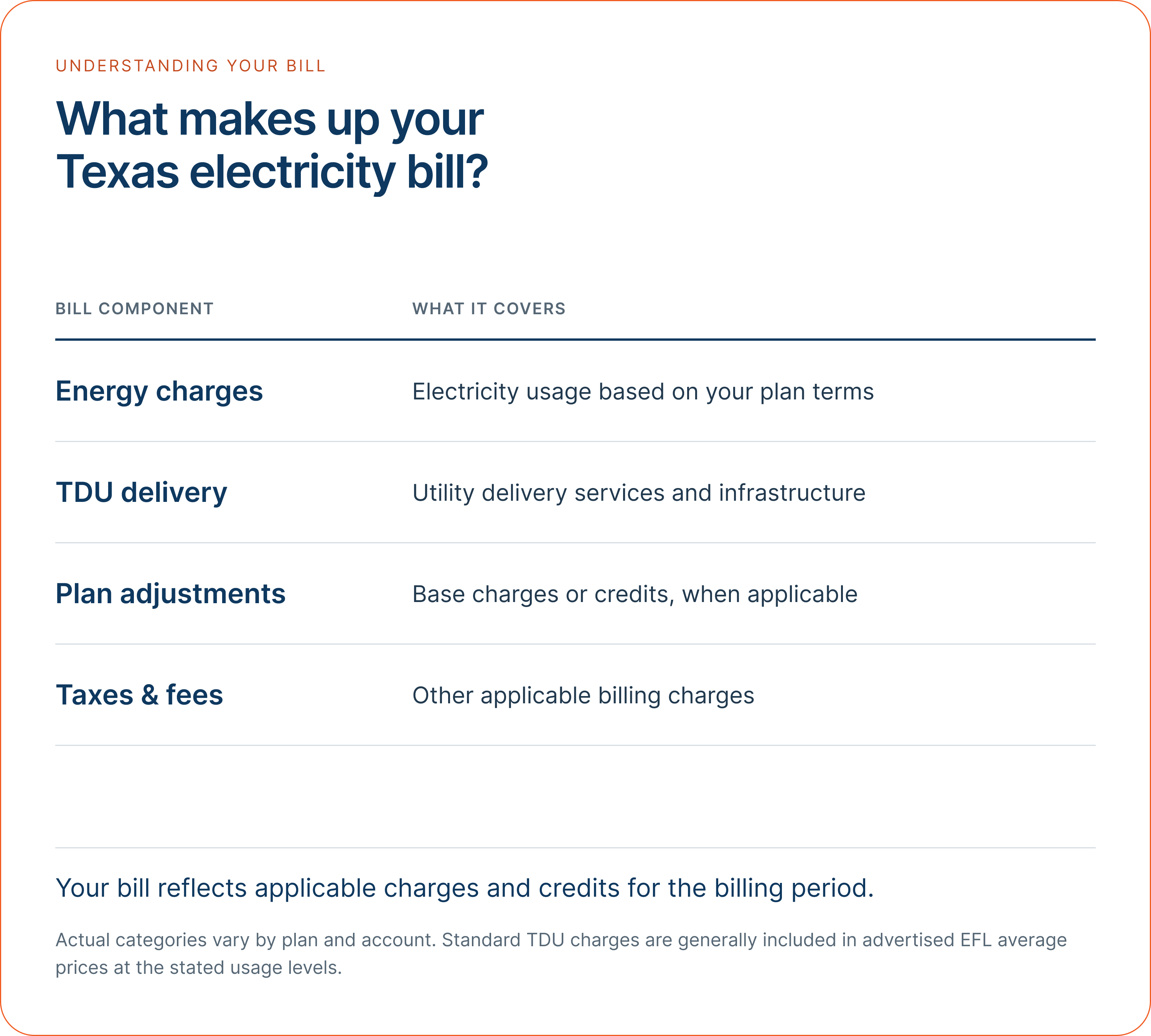
Your Texas electricity bill may include several types of charges. Understanding each component can help explain how your total is calculated.
Electricity Supply Charges
Electricity supply charges are associated with the electricity purchased through your retail electricity provider, such as APG&E.
Depending on your agreement, these may include usage-based energy charges, base charges, and applicable plan-specific adjustments or credits.
TDU Delivery Charges
A Transmission and Distribution Utility (TDU) operates and maintains the infrastructure used to deliver electricity to homes and businesses.
In Texas, utilities such as Oncor and CenterPoint Energy Houston Electric provide delivery services in their respective service territories.
Delivery charges may include a fixed monthly amount and a usage-based amount. The applicable charges depend on your utility service territory and tariff.
Taxes, Fees, and Other Charges
Depending on your location, account, and plan terms, your bill may include applicable taxes, fees, or other adjustments.
Can Your Electricity Bill Change With a Fixed-Rate Plan?
Yes. A fixed-rate electricity plan does not mean your total monthly bill will remain the same.
Under a fixed-rate plan, the contracted energy price is generally established for the agreement term, subject to the conditions and permitted adjustments described in the plan documents.
Your total charges may still vary based on electricity usage, applicable delivery charges, taxes, and other plan provisions.
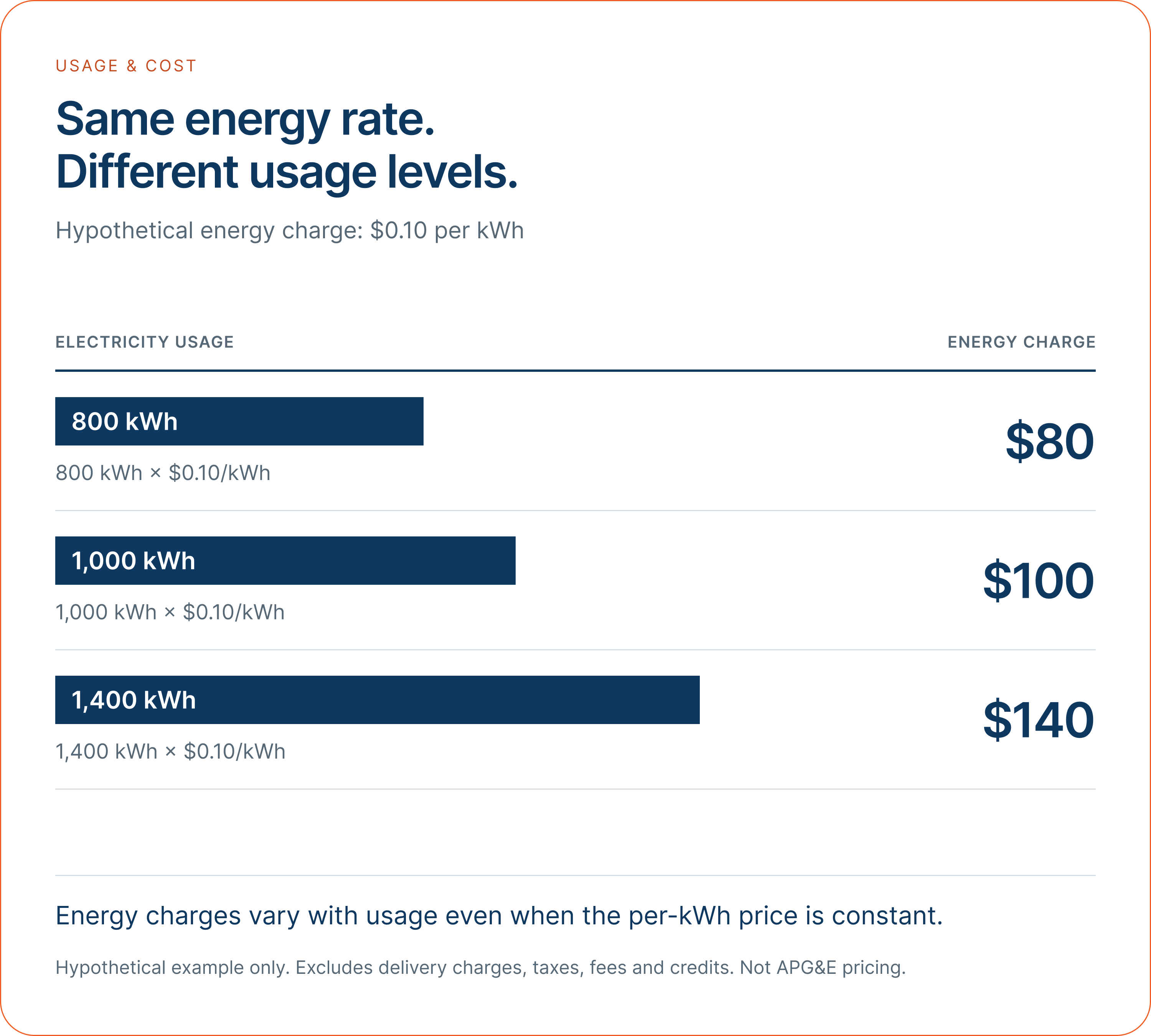
Consider a hypothetical example using a constant energy charge of 10¢ per kWh. While the rate remains the same, the calculated energy charge changes based on electricity consumption.
Seasonal conditions may also affect household electricity usage. For example, electric heating during colder weather may influence consumption, depending on the home's heating system, insulation, and household routines.
How Do You Calculate Your Effective Electricity Rate in Texas?
Your effective electricity rate represents the average electricity cost per kWh for a specific billing period.
To calculate it, divide your current-period electricity charges by the total kilowatt-hours used.
Effective electricity rate = Current-period electricity charges ÷ Total kWh used
The hypothetical example below demonstrates how this calculation works.
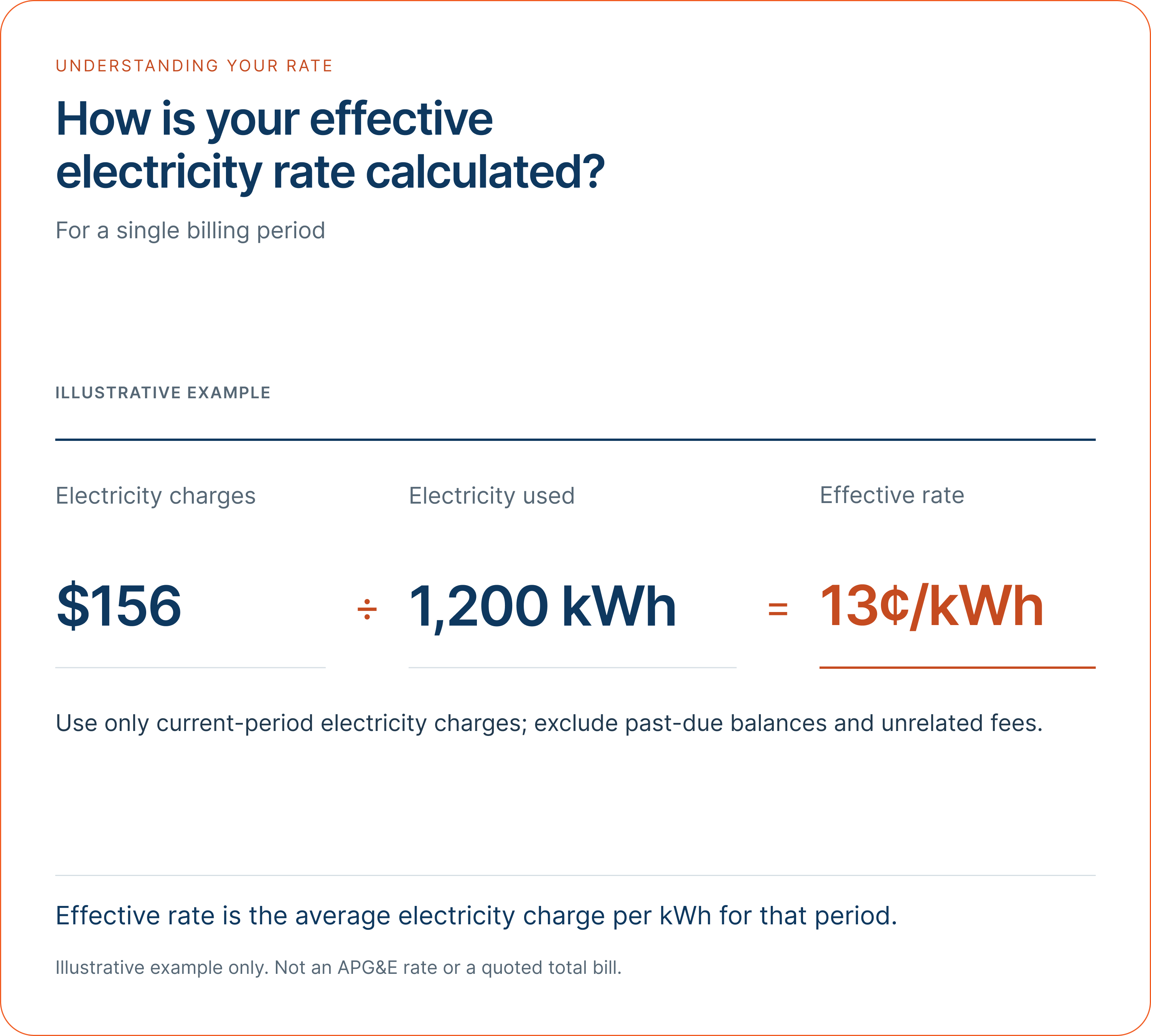
For a meaningful comparison, use the charges associated with the current billing period, including applicable delivery charges and credits. Exclude prior balances, late-payment fees, and unrelated account charges.
What Should You Ask Before Comparing Texas Electricity Plans?
Before evaluating electricity plans, review the Electricity Facts Label (EFL) and Terms of Service (TOS).
These documents provide important details about how a plan works, including its pricing structure, contract terms, and applicable charges.
Here are five questions to consider:
Frequently Asked Questions About Texas Electricity Bills
Understanding Your Texas Electricity Bill Starts With Knowing What to Ask
If you're wondering why your Texas electricity bill is so high, reviewing the individual components of your bill can provide useful context.
Advertised average prices, actual electricity usage, delivery charges, and plan terms each play a role in how electricity costs are calculated.
Understanding these factors can help you interpret your bill and evaluate electricity plan features based on your household's needs.